

Classical Music is not just a genre—it is a legacy, a discipline, and a spiritual journey that has shaped civilizations for centuries. At Dhamini Harmony Music Classes, we believe that Indian Classical Music is the foundation of all musical learning. Whether one is drawn to vocal training, instrumental mastery, or music theory, Indian Classical Music provides the structure, depth, and emotional richness that no other form can replicate.
From ancient temples to royal courts and modern concert halls, Indian Classical Music has evolved while preserving its sacred core. It carries the wisdom of generations, reflects cultural identity, and offers unmatched mental and emotional benefits.
In this comprehensive guide by Dhamini Harmony Music Classes, we explore:
-
The history and origin of Classical Music
-
The evolution of Indian Classical Music
-
Major ragas and their significance
-
Instruments used in Classical Music
-
The difference between Hindustani and Carnatic traditions
-
SEO-focused keywords for better digital visibility
Let us embark on this enlightening journey into the world of Classical Music.
The Origin and History of Indian Classical Music
Ancient Roots of Classical Music
The origin of Classical Music dates back thousands of years. In India, Classical Music traces its roots to the Vedic period, where hymns from the Samaveda were chanted in melodic patterns. These early forms of Classical Music were deeply spiritual and were used for meditation, rituals, and worship.
The structured system of swaras (notes), ragas (melodic frameworks), and talas (rhythmic cycles) gradually evolved into what we now recognize as Indian Classical Music.
In the West, Classical Music developed through medieval church chants and later expanded during the Renaissance, Baroque, Classical, and Romantic periods.
Evolution Through the Ages
The development of Classical Music in India can be divided into:
-
Vedic Period
-
Natyashastra Era (Bharata Muni)
-
Medieval Period
-
Modern Classical Period
The treatise Natyashastra laid down detailed rules for Classical Music, dance, and drama. Over centuries, musicians refined ragas, compositions, and performance styles.
At Dhamini Harmony Music Classes, students are taught not just performance, but also the historical and theoretical foundation of Classical Music.
Understanding the Structure of Indian Classical Music
The Concept of Swaras (Notes)
Classical Music is built on seven primary swaras:
-
Sa
-
Re
-
Ga
-
Ma
-
Pa
-
Dha
-
Ni
These seven swaras form the basis of all ragas in Classical Music.
Tala – The Rhythmic Cycle
Rhythm is equally important in Classical Music. Talas like:
-
Teentaal
-
Ektaal
-
Jhaptal
-
Rupak
create structured timing patterns that guide compositions.
Raga – The Soul of Classical Music
A raga is not just a scale. It is a melodic framework with:
-
Specific ascending (Aroha) pattern
-
Descending (Avaroha) pattern
-
Vadi and Samvadi notes
-
Emotional mood (Rasa)
At Dhamini Harmony Music Classes, we emphasize understanding ragas deeply before mastering performance.
Major Traditions of Indian Classical Music
Hindustani Classical Music
Originating in North India, Hindustani Classical Music evolved through Persian and Mughal influences. It includes forms such as:
-
Dhrupad
-
Khayal
-
Thumri
-
Tappa
Carnatic Classical Music
Carnatic Classical Music developed in South India and remains closer to ancient traditions. It includes:
-
Kriti
-
Varnam
-
Tillana
Both systems share the same spiritual foundation but differ in style, improvisation, and compositions.
Famous Ragas in Classical Music
Raga Yaman:
-
Performed in the evening
-
Evokes devotion and peace
-
Uses Tivra Ma
Raga Bhairav
-
Morning raga
-
Serious and meditative
-
Uses Komal Re and Komal Dha
Raga Bhimpalasi
-
Afternoon raga
-
Romantic and introspective
Raga Darbari Kanada
-
Deep and serious
-
Associated with royal courts
Raga Hamsadhwani
-
Popular in Carnatic Classical Music
-
Auspicious and energetic
Learning these ragas is a core part of training at Dhamini Harmony Music Classes
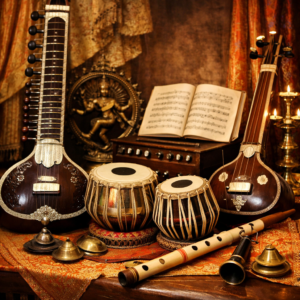
Instruments Used in Indian Classical Music
String Instruments
-
Sitar
-
Veena
-
Sarod
-
Tanpura
Percussion Instruments
-
Tabla
-
Mridangam
-
Pakhawaj
Wind Instruments
-
Flute (Bansuri)
-
Shehnai
Each instrument plays a vital role in Classical Music performances.
Benefits of Learning Indian Classical Music
Mental and Emotional Benefits:
-
Improves concentration
-
Reduces stress
-
Enhances memory
Spiritual Growth:
Classical Music is often described as a pathway to self-realization.
Discipline and Patience:
Training in Classical Music builds dedication and perseverance.
At Dhamini Harmony Music Classes, we nurture not just musicians but confident individuals.
The Role of Classical Music in Modern Times
Even today, Classical Music influences:
-
Bollywood compositions
-
Fusion music
-
Meditation music
-
Film background scores
Many modern musicians are trained in Classical Music before exploring other genres.
How to Begin Learning Classical Music:
-
Start with basic swaras
-
Practice daily with tanpura
-
Learn simple ragas
-
Focus on breath control
-
Perform regularly
At Dhamini Harmony Music Classes, beginners receive personalized guidance.
Conclusion: The Everlasting Magic of Classical Music
Classical Music is not just about notes and rhythm—it is about discipline, emotion, devotion, and cultural heritage. It has survived centuries because of its depth and adaptability.
At Dhamini Harmony Music Classes, we are committed to preserving and promoting the rich tradition of Indian Classical Music. Whether you aspire to become a professional performer or simply wish to learn for personal growth, Classical Music opens doors to creativity, peace, and excellence.
Join us and experience the transformative journey of Classical Music today.